


Last Week This Morning
- 10T: 4.13%
- 2T: 3.55%
- SOFR: 3.66%
- Term SOFR: 3.67%
- NFP: -92k vs 55k expected
- Unemployment Rate: 4.4% vs 4.3% expected
Those Jobs Tho!
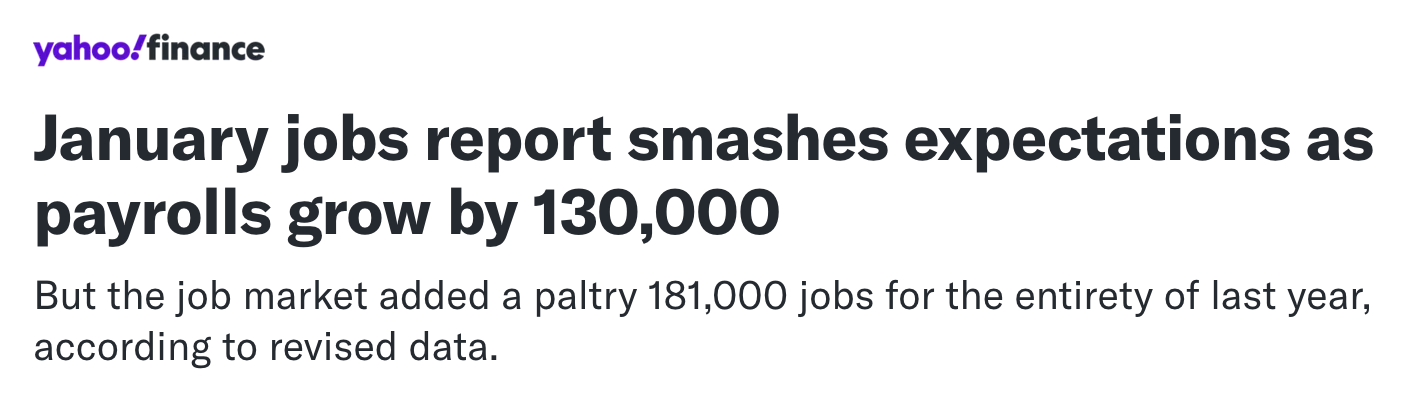
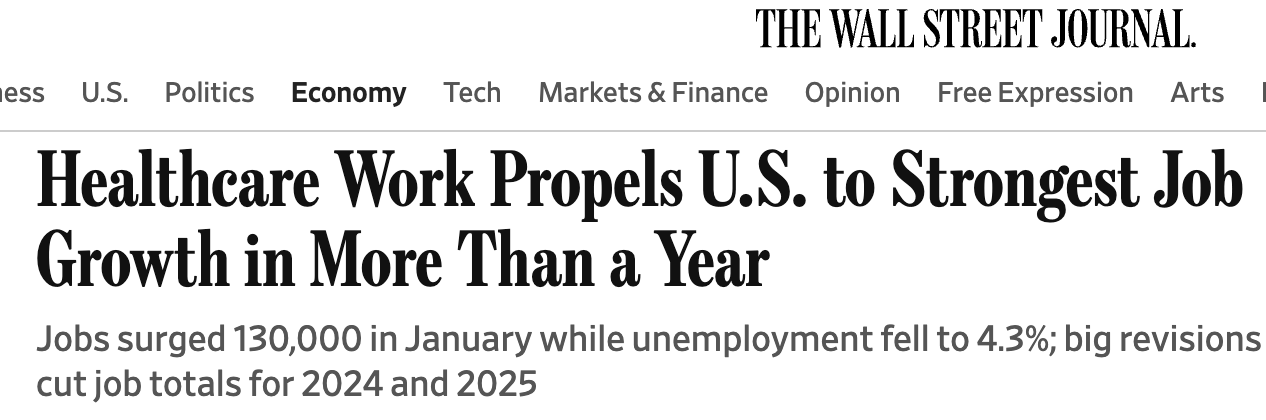
Let’s start the victory lap by revisiting a few of the hyperbolic reactions to last month’s allegedly strong report.
At least someone got it right…
Some genius wrote, “I am stunned at how everyone reacted so positively to this number. Not only do we have a track record of huge monthly revisions, and not only is January notoriously noisy, but last year’s monthly job gain was revised down from 49k to 15k.” Someone put that guy on Bloomberg TV!
In what is surely the ickiest take, CNBC talking head Rick Santelli said, “Jobs coming in at 130k, the juiciest going back to April of last year!”
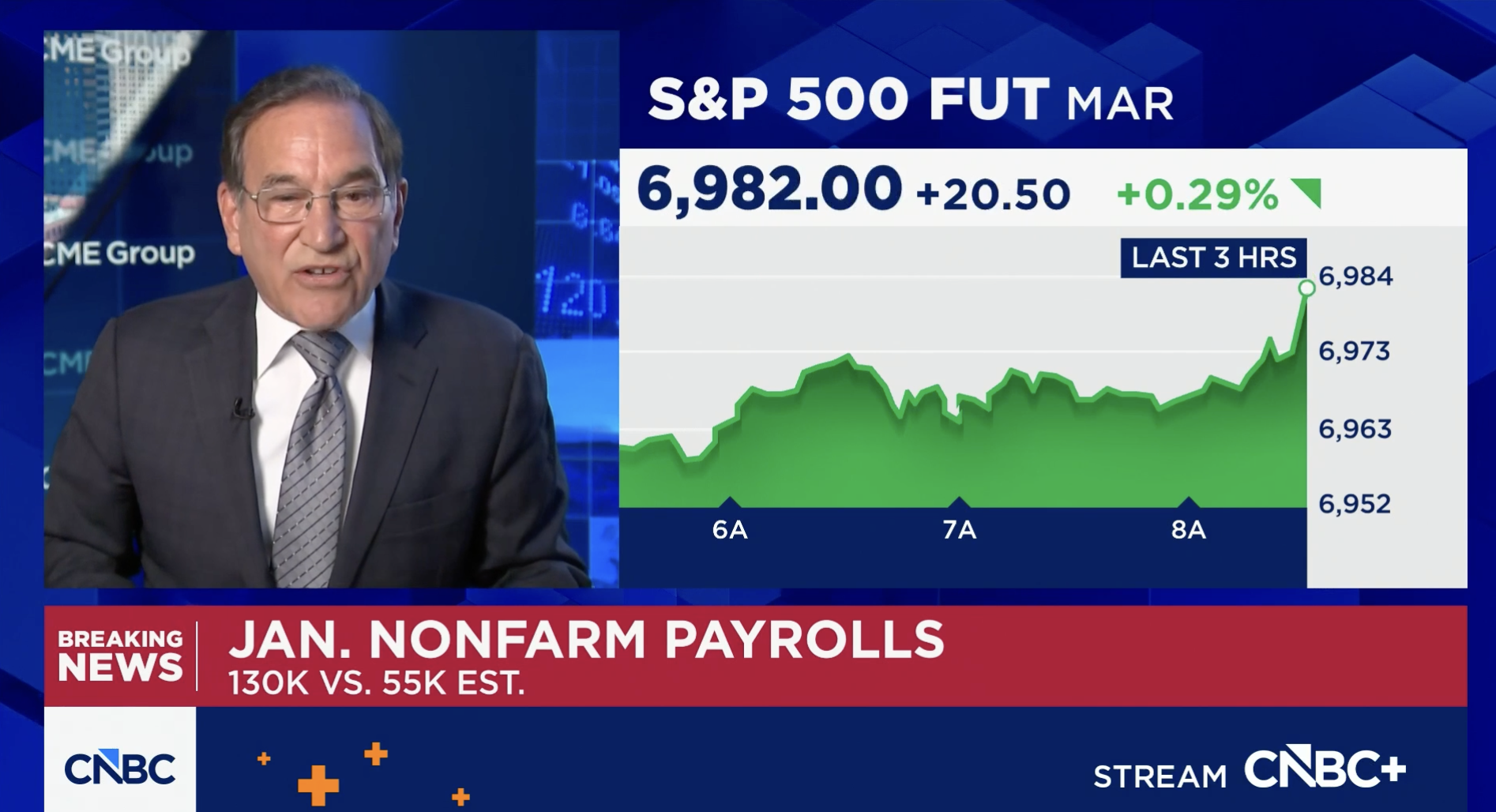
Inappropriate use of “juiciest” aside, Santelli made the exact same mistake as the other headlines. You may have skimmed over them, but the main headlines rant about the strength while the fine print notes last year’s annual numbers are revised down by nearly a million! In what universe does a monthly number we know will be revised down outweigh an annual revision of 800k+ jobs?!
Santelli even noted that last year’s huge downward revision was expected, so therefore not a big deal. If only we could have expected a downward revision to the 130k gain he was so excited about…
Oh wait, as SMBC Senior Economist Troy Ludtka pointed out, “nonfarm payrolls have now been revised down in 24 of the 25 months since January 2024 (96%) by an average of -94k jobs, equating to 60% of the NFP’s initially reported monthly gains of +157k!”
So how bad was Friday’s report?
- The 92k loss was the worst since December 2020
- December was revised from +48k to -17k
- The last two months were revised down a combined 69k
- Since May, the US economy has lost 19k jobs
- The Kaiser Permanente strike was 31k of the -92k, which means you can’t blame the strike for the report
- Labor force participation rate lowest since December 2021
- The Unemployment Rate moved back up to 4.4% and was 0.01% from being reported as 4.5%
- If we exclude healthcare, private payrolls fell by 67k
- Even accounting for the Kaiser Permanente strike, healthcare added just 3k jobs last month and might not be a dependable job driver anymore
- 3 month average NFP is just 6k, while the 6 month average is -1k
We are on a jobs rollercoaster. Even after the revision, January was still +126k but then February was terrible. I thought the BLS’s new birth/death adjustment methodology was supposed to improve monthly consistency?
Don’t worry Rick, even if I was right about the jobs market I was wrong about the market reaction to Iran…
Rates
The same genius that predicted the market overreaction to last month’s jobs report also missed the boat on the market reaction to the US attacking Iran: “Inflation is a distant second vs stuffing cash under the world’s mattress when war breaks out. Inflation will absolutely matter at some point, but not until we have more clarity around the military actions.”
Apparently, we have more clarity around the military actions because rates spiked when markets opened Monday…and then again after the terrible jobs report?!
I’m confused. I guess markets are discounting the possibility of a protracted, escalated conflict with Iran. Rates surging suggests inflation is the more pressing concern. But that’s only one part of the equation.
Trump wanted lower oil because it acts like a tax cut for consumers. The opposite is true, too. Rising prices are a tax, and spending falls at a time when the labor market is wobbling and consumers have run through their savings.
As one of my favorite economists Neil Dutta pointed out, “The risk is what happens next. There was quite a bit of enthusiasm heading into the year because of AI, tax refunds, inventory restocking, etc. I think that enthusiasm wasn't really justified given the momentum in the jobs market and now, we're dealing with a commodity market shock during a time household savings buffers have been drawn down.”
I think markets are underestimating the possibility of a drag on the global economy. If 20% of global oil ships through the Strait of Hormuz, how will supply chains hold up under a protracted disruption?
Those negative outcomes take time to play out, though. In the near term, higher oil means the Fed is on hold for longer. But once on the other side, we probably have more cuts. This year is setting up just like the last two years: Fed on hold 1H, cutting 2H.
In addition to the oil shock, we might have a Fed Chair shock. In 2009, while the UR was already 9% and surging to 10%, Kevin Warsh said, “I continue to be more worried about upside risks to inflation than downside risks.”
Does that sound like a guy that will want to cut in this environment?
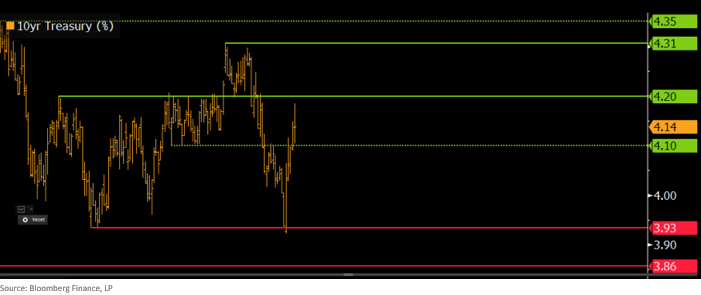
The 10 Year Treasury ran back up to 4.14%. Next top is 4.20% or a drop back down to 4.10%.
Week Ahead
I don’t have the slightest clue what to expect with rates right now, but I am sure news out of Iran will factor in heavily. We get some inflation data at the end of the week, but it won’t reflect the developments out of Iran yet so the market won’t care unless it suggests inflation existed before the attacks.
Last thing – I have a favor to ask. Take this two-minute AI survey.
The guys at CRE Analyst are some of my favorite in the business. We send about 10 teammates a year through their training courses and I can’t recommend them highly enough.
They are conducting a survey on how CRE folks are actually using AI. The results are anonymous and I promise they aren’t going to cold call you. But I think this benefits all of us, so I am hoping you will take two minutes to fill it out: AI Survey
